When we all lived in the forest
  • Home
  • Fantasy Reading
  • Science Fiction Reading
  • Publications
  • Amusements
  • Moth Books

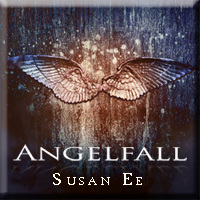
#25: Angelfall by Susan Ee

6/30/2013

0 Comments

 
When I did my Science Fiction Reading List in 2005-2008, there really was no viable market for self-published books.  Now, there is.  In my search for a fantasy author with a last name starting with "E," I tripped on this book.  It is really stunning, my favorite new book actually, since John Crowley's "Aegypt Quartet" from last year.  I'm not the only one who has noticed, either: this book is currently #5 on Amazon UK, and is doing MULTI-LANGUAGE releases.

It's about an Angel-born Apocalypse (the way the Apocalype is supposed to be, forget you, you stupid zombies), and although it is both marketed and, probably more importantly, paced as a YA novel, this is in fact an adult book.  The protagonist Penryn (named for the exit off Highway 50 from Sacramento to Reno, and inadvertently a Welsh name that is part of the township I was married in (Portmeirion is in Penryndeudrath)) has a 7 year old sister in a wheelchair and a schizophrenic mother who possibly maimed the little sister and may very well murder both of them -- teenage Penryn makes herself responsible to protect both of them from murderous Angels and the roving gangs of desperate Humans left in their wake. 

It's a really fabulous book, and I am a little nuts that I have to wait until November for the sequel.  The author was a lawyer, but obviously her first love is science fiction and fantasy: this book reminds me of the best of Holly Black and my very favorite author, Emma Bull. One of my favorite lines: When you're small enough to have to look up at everyone around you, there's no such thing as a dirty fight.

Lessons for writers: pacing tells the reader what to expect.  Make your pacing match your story.  Respect pacing. Oh, and make every sentence earn its keep.  Did I mention this is a really great book?
Picture
0 Comments

#24: Pawn of Prophecy by David & Leigh Eddings 

6/27/2013

2 Comments

 
Pawn of Prophecy is the first book of David Edding's Belgariad series.  I added Leigh up there, because his wife has indeed collaborated with him on all of these myriad plethoras of books, although publishers did not credit her in the early books.  Leigh passed away in 2007, and David in 2009: they were married 45 years.

The version of this I bought was the first three books of The Belgariad.  I read Pawn and I will probably read the others later: it's a quest, and a very pleasant read completely due to the really heart-felt characters.  Foremost of course, the main character, a boy named Garion, who watches the angst of others with a matching empathy that is so very endearing.  He does indeed do a lot in the observation-department, which is what a youngster would be relegated to, but because he is quite emotionally involved, it does not feel static.

I'm really not a quest person, which is a shame, because on some level quests are allegories for the passage of our own lives, which is why I think I balk at the rote and predictable elements of them.  

Oh. I'm afraid that not liking quests could possible say unkindly things about my psychological composition.

Lessons for Writers: Emotions are very fine, delicate, ephemeral, sensitive things.  If you can get them right, you are probably way ahead of the game.

                                                        
David & Leigh Eddings were quite the couple, yes,
                                                        and David certainly knew characters were their strength.
2 Comments

An Aside: Harmony by Project Itoh

6/21/2013

1 Comment

 
This isn't a fantasy book: it's a "catch-up-on-my-other-reading" book (CUOMOR). This chill Japanese science fiction story about health-care-gone-dystopic, written by an author who was and did die of cancer, was a fascinating examination of self/not-self, privacy and nanotechnology, will and soul, and an eery future society, that was almost -- but not quite -- undermined by its melodramatic characters. It had a lot of really great "ooo" moments though.  There was a really weird moment for me, where Edison Carter and Network 24 from MAX HEADROOM come into the story: I think it summed up my feelings on the entire story -- "Wow, and that's not quite right, and I'm not sure if either of those are in a good or bad way." Worthy of being read, so I shall certainly pass it on to my friend Jonna.
1 Comment

#23: The Name of the Rose by Umberto Eco

6/8/2013

0 Comments

 
Although this book is listed on a few fantasy lists, and many "best of" lists, it is not fantasy, but I am going to make a conceit and say it is.  The reasons are: (1) it takes place in the Medieval 1300s in an abbey full of monks, and (2) their Christianity, replete with the burning of witches and torturing of heretics, and arguments over laughter, sin and innocence, serve as the fantastical physics that drive the story. Also, I am tired of trying to find books written by authors starting with the letter "E."

It has not been good hunting. I accidentally read David Eddings only non-fantasy book (incidentally on hunting, and very good by the way) and did not care for either Eddison OR Erickson (whose Gardens of the Moon so nonplussed me that I abandoned it after 80 pages in the Chicago airport, hoping it would be found by someone who would love it.  I could not bear to lug it around anymore).

Okay.  Enough whimpering.  The Name of the Rose is about a Sherlock-style monk named William and his German novice Adso who arrive at a remote abbey to solve a mystery about murder... and books.  It is very readable and was written to be readable: "It matters a great deal because here we are  trying to understand  what has happened  among men who live among books, with books, from books, and so their words on books are important." and "Often books speak of other books." The many chapter headings kept the narrative moving as well, my favorite being "NIGHT: In which, if it were to summarize the prodigious revelations of which it speaks, the title would have to be as long as the chapter itself, contrary to usage."

Especially interesting to me was the concept: "The only thing that scares me about purity is haste." ... which is proved by the point when it is indeed haste that destroys the most important things in this tale. There are lots of interesting things sprinkled throughout the book.

And perhaps most interesting was what the author says at the end of the book, in which he confirms authors should never discuss what their books mean, that books are their own creatures in their own right, and then goes on to do something very akin to that. Might I add that Umberto Eco is an actual real live Semiotics Professor?  I had not idea such things existed, and right now I am not sure what my relationship to semiotics is, given that Mark Harmon (not the actor) told me his sister said the "Semiotics was the Voodoo of the English Language." That may very well be, since the Honorable Eco spends a great deal of time trying to explain how he removed his presence from the book so that the words spoke their own story without him. At a certain point, Eco starts to wonder if he has done this well enough, just as his poor characters ceaselessly wonder if their thoughts are chaste enough. The answer to both questions is probably the same.

Lessons learned about writing:  I agree with Eco's statement: "I discovered, namely, that a novel has nothing to do with words in the first instance. Writing a novel is a cosmological matter..." ; for me, that means ideas, even things as base as physical locations, something real, drive stories. Secondly, I both agree and disagree with his supposition that an author is not the story they write because once the pen, metaphorical or otherwise is put down, it doesn't matter if they are infused with the story or not -- the story is now its own creature.


0 Comments

    Page

    In 2011, I began reading a list of 100 Great Fantasy Novels. I am listing them on this page.

    Me
    ​
    Hi!  I am Nye Joell Hardy.  
    I write science fiction and fantasy.  The science fiction makes my head happy.  The fantasy makes my heart happy.  Although I sell all these things, none are making me rich.  But I'm happy, damn it.  

    Picture

    Archives

    March 2016
    February 2016
    January 2016
    December 2015
    October 2015
    September 2015
    August 2015
    April 2015
    December 2014
    October 2014
    September 2014
    August 2014
    June 2014
    May 2014
    March 2014
    February 2014
    January 2014
    December 2013
    November 2013
    August 2013
    July 2013
    June 2013
    April 2013
    February 2013
    January 2013
    December 2012
    November 2012
    October 2012
    August 2012
    July 2012

    Categories

    All
    Atlantis
    Buddhist
    Charles John Cutliffe Wright Hyne
    Christopher Priest
    Cthulhu
    Dean Koontz
    Diana Wynn Jones
    Dylan Thomas
    Emma Bull
    Fantasy
    Forgotten Books
    Gene Wolfe
    Hindu
    Howl's Moving Castle
    H.P. Lovecraft
    Jan Lars Jensen
    John Crowley
    Lovecraft
    N.K. Jemisin
    Odd Apocalypse
    Odd Thomas
    Oree
    Pterodactyl
    Roger Zelazny
    Rudyard Kipling
    Shere Khan
    Shiny
    Shiva 3000
    Stephen King
    The Broken Kingsoms
    The Dark Tower
    The Drawing Of The Three
    The Gunslinger
    The Hundred Thousand Kingdoms
    The Jungle Book
    The Lost Continent
    The Waste Lands
    T.S. Eliot
    Viriconium
    Wales
    Welsh
    Writing
    Writing Lessons

    RSS Feed

Proudly powered by Weebly